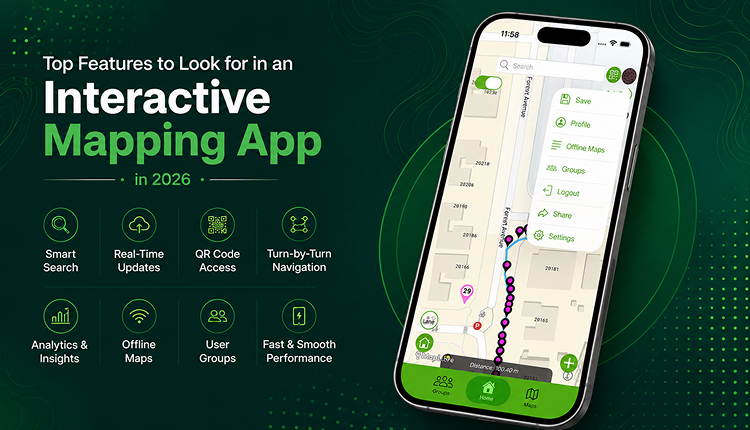
Top Features to Look for in an Interactive Mapping App in 2026
Learn which interactive mapping app features matter most for events, campuses, sports complexes, parks, and venues in 2026.
Introduction
As organisations continue to embrace digital-first environments, interactive mapping apps have transitioned from a premium luxury to an essential infrastructure tool. They are crucial for improving crowd navigation, boosting visitor engagement, and streamlining spatial wayfinding across multiple industries. From busy conferences and music festivals to sprawling university campuses, sports complexes, state parks, and multi-building corporate venues, dynamic digital maps are rapidly replacing traditional PDF layouts and printed paper guides.
Today's modern visitors expect immediate access to localised data, seamless mobile-friendly navigation, and instant real-time updates right from their pockets. Organisations that fail to provide these conveniences frequently encounter predictable logistical headaches, including severe visitor confusion, overwhelmed physical support desks, and plummeting engagement levels.
This is precisely where modern interactive mapping apps step in to rewrite the visitor experience. However, not all mapping solutions on the market offer the same baseline capabilities. Choosing the right platform requires understanding the core features that directly impact real-world usability and backend operational efficiency.
In this comprehensive guide, we'll explore the top 15 features to actively look for in an interactive mapping app in 2026.
What Is an Interactive Mapping App?
An interactive mapping app is a cloud-hosted digital navigation platform that enables organisations to design, manage, and distribute dynamic maps that users can interact with across smartphones, tablets, and desktops.
Unlike static, unclickable images, interactive maps empower visitors to:
-
Search complex locations and vendor booths instantly.
-
View optimised walking directions and route paths.
-
Access highly detailed, localised information pop-ups
-
Navigate multi-level indoor and outdoor venues fluidly.
-
Discover hidden attractions, amenities, and sponsors.
-
Receive critical updates and emergency notifications in real time
By combining spatial graphics with live data, these platforms create highly engaging, stress-free environments for public and private spaces alike.
Why Interactive Mapping Apps Matter
Deciphering large venues and sprawling corporate or public environments can be notoriously difficult for new visitors. Without a reliable digital assistant, people frequently struggle to pinpoint essential targets on the move, such as event stages, breakout session rooms, pre-booked parking structures, public restrooms, food courts, popular tourist attractions, or specific campus buildings. Interactive mapping apps systematically simplify physical navigation, which directly elevates visitor satisfaction while boosting the venue's overall operational efficiency.
15 Features Your Interactive Map Must Have in 2026
To ensure you select a future-proof, highly effective platform, look for a solution that explicitly ticks the boxes for these fifteen critical features:
1. Interactive Digital Real Estate
The absolute anchor of any mapping application is the map interface itself. Modern digital layouts must be completely dynamic, giving users the freedom to fluidly pinch-to-zoom, pan across coordinates, explore structural levels, view distinct points of interest, and tap on targeted nodes to trigger contextual informational pop-ups. Flat, static image representations are no longer sufficient to hold visitor attention or solve complex wayfinding needs.
2. App-Free QR Code Map Access
QR code maps have solidified their place as one of the most widely adopted and frictionless wayfinding tools available. Visitors simply scan a strategically placed QR code on physical venue signage to instantly launch the map.
The Major Advantage: Because the map opens directly in the user's native mobile web browser, there is absolutely no app store download required. This completely removes download hesitation and data friction, leading to skyrocketing adoption rates across events, public facilities, and campuses.
3. Real-Time Cloud Updates
Physical environments are inherently unpredictable. Venues frequently undergo sudden adjustments, including last-minute room changes, schedule shifts, unexpected vendor relocations, or emergency parking area updates. Your mapping application must feature a centralised administrative dashboard that allows managers to update text, routing, and graphics instantly, ensuring that visitors are always viewing accurate, live information.
4. Smart Searchable Locations
Visitors should never be forced to waste time manually scanning a dense map layout to find their destination. A professional mapping platform must include an intuitive, fast search bar that allows users to instantly search for and find specific buildings, rooms, vendor booths, localised attractions, public facilities, and parking structures. A clean search index dramatically cuts down navigation time and crowd frustration.
5. Mobile-First Optimisation
The vast majority of your visitors will interact with your map while walking around your space holding a smartphone. Therefore, the application must be designed from the ground up for mobile devices, offering lightning-fast loading times, fully responsive sizing layouts, touch-friendly navigation controls, and crystal-clear structural paths.
6. White-Label Custom Branding
To deliver a fully cohesive and professional experience, organisations require a platform that completely supports custom branding. Look for mapping software that lets you seamlessly inject your official corporate logos, custom hex brand colours, specific event themes, and personalised font styles straight into the mapping user interface.
7. Digital Wayfinding Tools
True digital wayfinding goes far beyond merely throwing a flat map onto a phone screen. Advanced mapping apps provide interactive visual cues that help users quickly orient themselves within an environment, contextualise their current location, map out the most efficient walking pathways, and reach their intended destinations significantly faster.
8. Rich, Contextual Location Profiles
Every pinned point of interest on your map should transform into an interactive information hub when tapped. The platform should allow you to embed useful data layers directly into a location pin, including text descriptions, high-resolution imagery, direct organiser contact details, live operating hours, up-to-the-minute event schedules, and critical sponsor promo links.
9. Seamless Website Integration
Your digital map should be incredibly easy for visitors to discover long before they ever set foot inside your physical venue. Premier mapping platforms allow you to copy an embed code and place the fully interactive map directly into your external event website, university web portal, sports stadium app, or public park landing page for maximum user convenience.
10. Granular Analytics and Visitor Insights
One of the most valuable structural advantages of transitioning to a digital map is the acquisition of backend data. A robust solution captures anonymous, aggregated visitor metrics, allowing managers to see peak usage times, the most highly typed search queries, traffic flow bottlenecks, and popular locations. These insights provide concrete data to structurally optimise floor plans for future events.
11. Advanced Inclusivity & Accessibility Features
Ensuring your space is entirely accessible to individuals with limited mobility or sensory needs is an absolute operational priority. Your mapping application should support customised toggle layers that explicitly draw out step-free accessible routes, elevator banks, accessible entrance doorways, dedicated ADA parking zones, and accessible restroom facilities.
12. Centralised Multi-Venue Support
If you are an enterprise organisation managing a complex network of spaces—such as a university with multiple campuses, a city managing several public park systems, or an event company coordinating rotating venue contracts—you need multi-venue support. Ensure the software allows you to build, manage, and monitor multiple distinct maps from one singular, centralised admin account.
13. Integrated Sponsor and Ad Opportunities
For commercial festivals, trade shows, and public arenas, your digital map can easily double as a highly effective revenue-generating asset. Choose a platform that offers built-in sponsorship real estate, allowing you to highlight premium sponsor logos directly on the map surface, feature paid location placements, display temporary ad banners, and deploy targeted promotional pop-ups.
14. Total PDF Map Replacement Capabilities
A successful digital migration means completely moving away from unclickable, static visual mediums. Your chosen interactive mapping application should be robust enough to entirely replace the need for traditional paper prints, static downloadable PDFs, and manual directory boards, driving down material costs while vastly increasing operational flexibility.
15. Future-Ready Technical Architecture
The digital mapping space is evolving rapidly. To maximise your software investment over the next decade, look for an agile, forward-thinking platform that is actively building out support for next-generation technologies like augmented reality (AR) visual overlays, precision indoor blue-dot positioning, smart AI-powered localised recommendation engines, and live crowd congestion routing tools.
Interactive Maps vs. Traditional Map Mediums
| Feature | Modern Interactive Apps | Legacy PDF Layouts | Printed Paper Guides |
| Real-Time Updates | Yes, instant cloud push | No, requires full file overwrite | No, completely unchangeable |
| Search Functionality | Yes, keyword search filtering | No, manual visual scanning only | No, page-by-page scanning |
| Frictionless QR Access | Yes, direct web browser render | Limited, requires a heavy file download | No, completely offline format |
| User Analytics Capture | Yes, log searches and traffic trends | No, zero visitor insight visibility | No, unmeasurable interaction |
| Sponsorship Revenue | High, premium pins & clickable ads | Minimal, fixed logo placements | Minimal, static print ads |
| Accessibility Routing | Advanced, step-free pathway filters | Basic, minimal symbolic marking | Basic, tiny static print indicators |
| Material Maintenance Costs | None, entirely digital deployment | Ongoing, manual re-export design fees | High, heavy recurring print overhead |
Industries Leading the Digital Wayfinding Shift
-
Events and Conferences: Powering seamless transitions between busy speaker halls, extensive trade show exhibitor booths, and designated networking zones.
-
Stadiums and Sports Complexes: Guiding thousands of ticket holders directly to their exact seating rows, parking zones, team merchandise stands, and concessions.
-
University and College Campuses: Helping incoming students, faculty, and visiting guests independently orient themselves across massive multi-acre quadrangles, libraries, and classrooms.
-
Parks and Recreation Systems: Outfitting trailheads with responsive maps detailing winding trails, scenic outlooks, visitor centres, and first-aid check stations.
-
Corporate Parks: Assisting new hires, out-of-town executives, and visiting clients in locating meeting rooms and offices across complex multi-building corporate landscapes.
How emapX Live Delivers These Features
When it comes to executing a flawless digital migration, specialised platforms like emapX—Live Custom Maps are setting the industry benchmark. emapX Live provides organisations with an exceptionally powerful, user-friendly ecosystem to build custom interactive maps that systematically erase navigation friction and elevate the visitor journey.
By uniting live interactive visuals, instant cloud updates, app-free QR code deployment, and direct website embedding with sophisticated sponsor monetisation channels and multi-location management controls, emapX Live enables any venue to entirely move past the age of the static PDF map. It provides a smooth, highly professional digital layer that modern visitors actively appreciate and rely on.
Frequently Asked Questions
What exactly is an interactive mapping app?
An interactive mapping app is a cloud-based digital solution that lets organisations design and manage highly dynamic, responsive maps featuring built-in keyword searches, clickable points of interest, and real-time navigation tools.
Why is app-free QR code access considered a must-have feature?
QR code maps remove user hesitation. Instead of forcing a visitor to wait for, download, and set up a bulky mobile application from an app store, a quick QR scan opens the full interactive map instantly inside their phone's native web browser.
Can an interactive map completely replace my venue's PDF map?
Absolutely. Interactive maps perform every task a PDF can but add critical layers of value, including live search, instant data updates, accessibility route filters, and user analytics that flat PDFs cannot replicate.
Can we track the specific identities or locations of our users?
No, tracking is completely anonymous. Professional platforms only log aggregated, privacy-compliant trends—such as the most frequently searched words, overall peak usage times, and total node clicks to help managers optimise venue layouts.
How difficult is it to update map information if an entry closes or a vendor moves?
It takes seconds. Administrators simply log into a centralised backend dashboard, make the necessary textual or visual layout changes, and hit publish. The updates sync across all active user devices instantly.
Conclusion
Interactive mapping apps have solidly established themselves as non-negotiable infrastructure for modern organisations aiming to maximise spatial navigation, scale crowd engagement, and deliver world-class visitor experiences. From the extreme convenience of instant QR code access and real-time cloud data updates to accessibility route filters, digital wayfinding tools, and monetisation channels, selecting the right feature-rich platform drastically reshapes how the public interacts with your physical space.
As consumer and attendee expectations continue to lean heavily into digital-first speed and convenience through 2026, investing in a robust mapping solution like emapX Live gives your organisation a massive operational advantage. When finalising your decision, explicitly prioritise software that maximises real-world usability, administrative flexibility, and long-term tech scalability. Transitioning your space into an interactive, digital landscape is the single most effective way to help people connect confidently with the places around them.
What kind of physical layout are you currently managing, and which of these fifteen features would solve your team's biggest operational headache?
